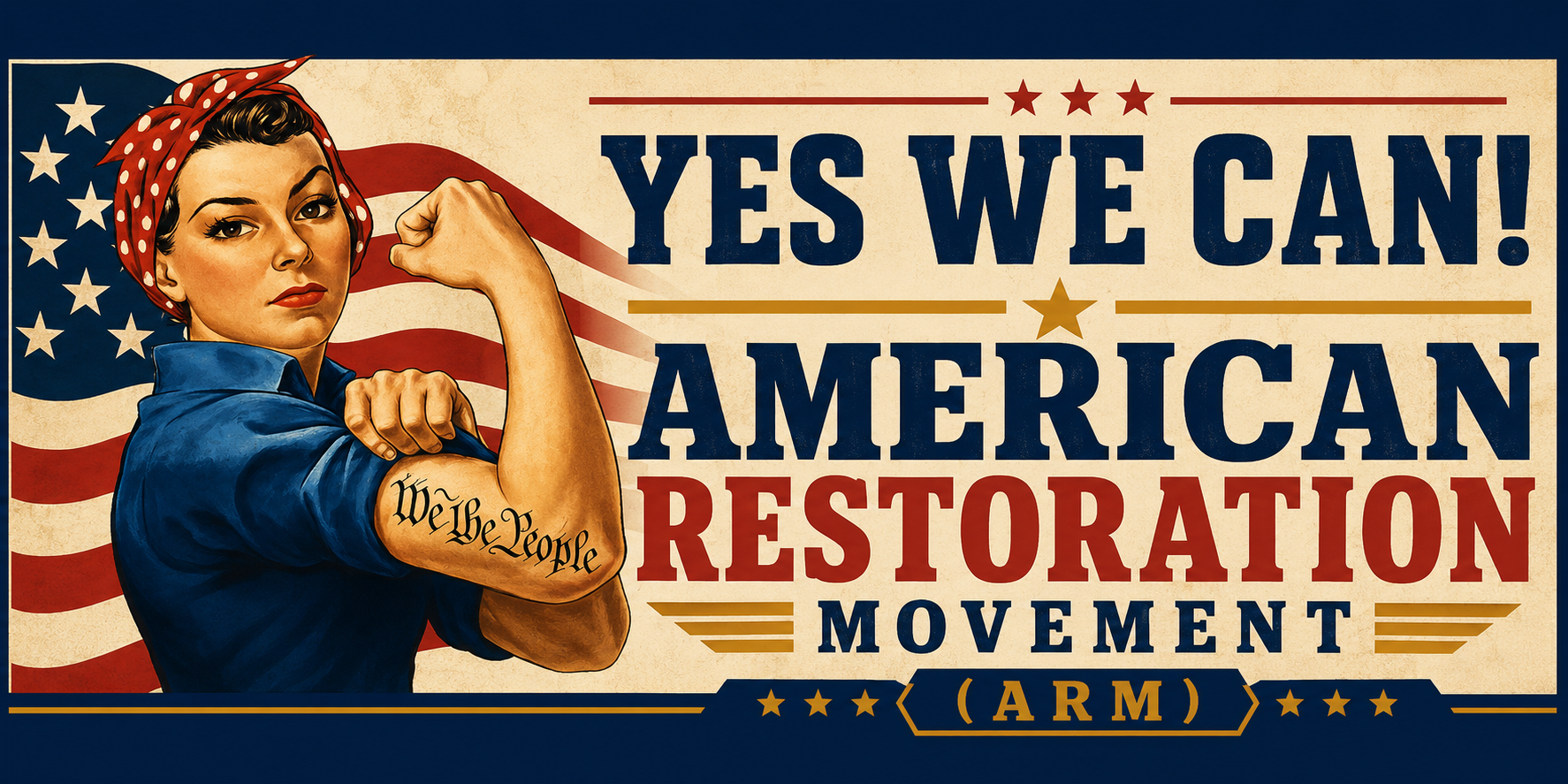
Presents…
A National Policy Framework
Prepared by Alvaro "Al" Cores
Graduate of Cornell University Class of 1993
Government Major
On Behalf of the ARM Committee, A Coalition of Teachers from NJ/NY/PA
April 10th, 2026
The American Restoration Movement (ARM) is a bipartisan, solutions-oriented initiative focused on restoring constitutional governance, economic stability, and public trust in the United States. We practice nonviolent, civil discourse and encourage Americans from all demographic backgrounds and political parties to join us in this historic, citizen-created, reform platform.
Key priorities include restoring accountability in government, rebuilding the middle class, expanding homeownership and small business opportunity, protecting civil liberties, and ensuring long-term fiscal stability.
ARM respectfully seeks engagement with policymakers to refine these proposals into actionable legislation. Current policy makers are encouraged to announce their support for this measure. If they refuse, ARM calls upon a new generation of candidates to run from office as Democratic, Republican, and Independent representatives of our movement.
The United States is at a critical inflection point. Public trust in institutions has declined, economic pressures have intensified, and many Americans feel disconnected from governance. Political discord and social toxicity have reached record levels. According to political science metrics, the United States of America in 2026 finds itself in a “pre-revolutionary” stage.
These challenges can be addressed through thoughtful, constitutional reform before deeper instability emerges.
The American Restoration Movement (ARM) is a comprehensive national initiative dedicated to restoring the foundational principles of the United States: constitutional governance, individual liberty, economic opportunity, and equal justice under law.
Over time, many Americans have lost confidence in the institutions that govern them. Economic pressures, declining trust, and growing complexity in modern systems have created a sense that the nation has drifted from its original purpose. ARM exists to address these challenges through thoughtful, structured, and principled reform.
This platform is not rooted in partisanship, but in the belief that the strength of the Republic depends on accountability, transparency, and a renewed commitment to the common good. It seeks to realign public policy with the interests of the American people while preserving the freedoms and opportunities that define the nation.
The United States of America is facing an unprecedented existential crisis. A Princeton University study in 2014 concluded that the US Government functions like oligarchy, and average citizens do not have a voice at the table. “Pay to play” campaign finance has allowed a silent coup d’état to occur in the United States decades ago, while vestiges of the defunct republic are kept in place for public show. Furthermore, the American middle class has been absolutely decimated by every objective economic metric at our disposal. From the perspective of the general public, the US Government in 2026 is acting like a Hunger Games styled oligarchy that is completely disconnected from reality and its citizens. This is a volatile situation that may result in mass civil unrest or civil war.
To avoid these disastrous outcomes, a group of teachers from New York, New Jersey, and Pennsylvania, led by their founder, Alvaro “Al” Cores, a former history teacher and school principal from New Jersey, have founded the American Restoration Movement (ARM) out of the deep love for their country. Our members belong to all political parties and demographic backgrounds. We are united in our solutions-oriented approach to restoring our nation to greatness. We are “America First” in the purest sense, with a systems-thinking approach to political, economic, and social reform. We denounce identity politics and the toxic political discourse currently evident in America, as well as violence, corporate greed, political nepotism, and partisan politics.
The output of our platform is the American Restoration and Reform Act (ARRA). This document is a draft version of proposed legislation that will restore the American Republic & economic opportunity and avoid a violent confrontation down the road between the United States Government and its increasingly disenfranchised citizens. In order for the quickly deteriorating society of the United States to avoid internal implosion, We the People are imploring our lawmakers to pass the ARRA Bill as its top national priority. The successful passage of ARRA on the 250th Anniversary of the United States of America would undoubtedly be a huge victory for the nation. It would prove that American Exceptionalism is alive and well and that the roadmap left by the Founding Fathers is applicable in all time periods.
Constitutional Integrity
Government must operate within the limits and structure defined by the The United States Constitution.
Individual Liberty
The rights of citizens—including speech, privacy, property, and due process—must be protected in both traditional and modern contexts.
Economic Fairness & Opportunity
The system should reward hard work, encourage innovation, and allow all Americans to build stability and wealth.
National Sovereignty & Security
The United States must maintain control over its borders, resources, and critical systems.
Transparency & Accountability
Public institutions must remain open, accountable, and responsive to the people they serve.
Strong Families & Communities
Stable families and local communities are the foundation of a healthy and enduring society.
ARM is a call to action—not for division, but for renewal. It recognizes that meaningful reform must be achieved through lawful, constitutional processes and guided by a shared commitment to the future of the nation.
The policies that follow are designed to restore balance, strengthen institutions, and ensure that the American Dream remains attainable for future generations.
ARRA has a total of ten sections and forty-three talking points. They are as follows:
The American Restoration Movement calls for comprehensive campaign finance reform to eliminate the current “pay-to-play” system and restore public trust in federal elections. Under this proposal, all candidates for federal office would receive an equal, fixed allocation of public funding to ensure a level and transparent electoral process.
In addition, the proposal seeks to significantly restrict the influence of lobbying organizations and political action committees (PACs), with the goal of eliminating disproportionate financial influence over public policy. These reforms are intended to promote fairness, accountability, and equal access to the democratic process.
Finally, the Movement emphasizes the importance of establishing high standards for public service, encouraging the selection of individuals of strong character, sound judgment, and demonstrated competence to serve in elected office.
James Madison — Federalist No. 10
Warned that factions (special interests) could corrupt government and act against the public good. Efforts to limit concentrated influence reflect this concern.
George Washington — Farewell Address (1796)
Cautioned against “the baneful effects of the spirit of party” and the risk of organized groups exerting undue influence over government.
Thomas Jefferson
Advocated for a government responsive to the people and resistant to corruption, emphasizing the importance of broad and fair civic participation.
John Adams
“Our Constitution was made only for a moral and religious people. It is wholly inadequate to the government of any other.”
Reinforces the importance of ethical leadership and civic virtue.
Alexander Hamilton — Federalist No. 68
Emphasized the selection of leaders with “ability and virtue,” supporting the principle of high standards for public office.
The American Restoration Movement calls for the passage of legislation establishing clear and enforceable term limits for federal officeholders. Under this proposal, Senators would be limited to two terms (12 years), Members of the House of Representatives to three terms (12 years), and the President to two terms (8 years). These limits would be cumulative, applying regardless of whether service is consecutive or non-consecutive.
This reform is intended to prevent the long-term concentration of political power, encourage civic participation, and ensure that public office remains a temporary position of service rather than a permanent career.
Thomas Jefferson
“When a man assumes a public trust, he should consider himself as public property.”
Jefferson consistently supported rotation in office to prevent entrenched power.
James Madison — Federalist No. 51
“Ambition must be made to counteract ambition.”
Structural limits like term caps help ensure no single individual accumulates excessive influence over time.
George Washington
His voluntary decision to step down after two terms established a lasting precedent for limited tenure and peaceful transfer of power.
Alexander Hamilton — Federalist No. 72
While Hamilton debated term limits, he acknowledged the importance of balancing stability with accountability, which this proposal seeks to achieve.
The American Restoration Movement calls for the implementation of transitional provisions to ensure compliance with newly established federal term limits. Officeholders whose cumulative years of service exceed the newly enacted limits would be required to complete an orderly and phased transition out of office, ensuring continuity of governance while restoring the principle of limited tenure in public service.
To strengthen public trust and reduce conflicts of interest, the Movement further recommends enhanced eligibility standards for candidates seeking federal office. These standards would include robust transparency requirements regarding financial interests, prior affiliations, and potential conflicts, particularly with lobbying organizations, major financial institutions, and entities that may exert undue influence over public policy.
Finally, the Movement supports the development of clear, merit-based criteria for public service—focused on demonstrated competence, ethical integrity, and financial transparency—to ensure that those entrusted with governing meet the highest standards of civic responsibility. ARM further insists that candidates from office have no connections to Wall Street, Think Tanks, and NGOs and other front groups used by oligarchs to control our republic. Finally, all candidates with a net worth over $10 million will be disqualified from running for public office.
Thomas Jefferson
Supported rotation in office and warned against the dangers of long-term political entrenchment, favoring a system where leadership remains accountable and temporary.
James Madison — Federalist No. 57
Emphasized that elected officials should remain dependent on the people alone, not influenced by external or special interests.
George Washington
His voluntary departure from office reinforced the principle that leadership is a temporary public trust, not a permanent entitlement.
John Adams
Stressed the importance of virtue and integrity in public office, noting that republican government depends on the moral character of its leaders.
Alexander Hamilton — Federalist No. 76
Highlighted the importance of qualified and capable individuals in positions of authority, reinforcing the need for merit-based selection.
The American Restoration Movement calls for enhanced oversight and enforcement mechanisms to address potential conflicts of interest and unlawful financial activity among current and former Members of Congress and US Presidents and Vice Presidents.
This includes the establishment of independent investigative procedures to review stock trading activity by elected officials for potential violations of insider trading laws. Where violations are identified and proven through due process, appropriate criminal penalties and financial restitution should be pursued in accordance with existing law.
Additionally, the Movement supports rigorous enforcement of anti-corruption statutes to investigate and prosecute any instances of bribery or quid pro quo arrangements involving corporations, foreign entities, or other actors seeking to influence legislation.
Any assets lawfully recovered through these enforcement actions may be directed toward reducing the national debt, consistent with federal law and judicial rulings.
James Madison — Federalist No. 57
Emphasized that public officials must remain faithful to the people and not use their position for personal gain.
George Washington
Warned against corruption and foreign influence, urging vigilance against those who would subvert public trust for private advantage.
Thomas Jefferson
Advocated for strict accountability in government, noting that public officials must be held responsible for abuses of power.
Alexander Hamilton — Federalist No. 65
Identified abuse of public trust and corruption as among the most serious offenses in a republic, warranting investigation and potential removal.
John Adams
Emphasized that a republic depends on laws that restrain corruption and preserve integrity in public office.
The American Restoration Movement supports the strict enforcement of existing federal statutes governing unauthorized foreign engagement, including the Logan Act, to ensure that elected officials and public servants do not conduct independent negotiations or communications with foreign governments outside of authorized diplomatic channels.
In addition, the Movement calls for enhanced transparency and oversight regarding participation by public officials in private international forums, conferences, and organizations. This includes the disclosure and review of involvement in high-level gatherings—such as the World Economic Forum (Davos), the Bilderberg Group, and similar roundtables—to ensure that such engagements do not create conflicts of interest or undermine U.S. sovereignty.
Where evidence demonstrates violations of federal law, conflicts of interest, or actions taken contrary to the interests of the United States, appropriate legal review and enforcement should be pursued in accordance with due process.
George Washington — Farewell Address (1796)
Warned against foreign influence and entanglements, urging the nation to guard against external actors shaping domestic policy.
James Madison — Federalist No. 41
Emphasized the importance of protecting national sovereignty and guarding against external influence over republican government.
Alexander Hamilton — Federalist No. 22
Noted the dangers posed when foreign powers gain influence over domestic governance and decision-making.
John Jay — Federalist No. 64
Highlighted the need for carefully controlled diplomatic authority, entrusted only to those acting on behalf of the nation.
The American Restoration Movement calls for reforms to restore the constitutional balance of power among the three branches of government and address the long-term expansion of executive authority.
This includes establishing clear statutory limits on the use of executive orders to ensure they are used only within constitutionally appropriate bounds and do not substitute for legislative action. The Movement also supports strengthening the War Powers Resolution to reinforce Congress’s constitutional authority over the initiation of military engagements, ensuring that significant or sustained military actions receive appropriate legislative authorization and oversight.
Additionally, the Movement proposes the creation of a structured, independent judicial review process to evaluate the constitutional validity of existing executive actions going back to Abraham Lincoln. This review would be conducted in accordance with established legal principles, with the goal of identifying and addressing actions that exceed constitutional authority.
These reforms are intended to reaffirm the system of checks and balances and ensure that no single branch of government exercises powers beyond those granted under The United States Constitution. Currently, the Executive Branch has morphed into the Imperial Presidency and the Legislative Branch is, but a mere appendage of the lobbying groups depicted in the book, “Showdown at Gucci Gulch.”
James Madison — Federalist No. 47
“The accumulation of all powers… in the same hands… may justly be pronounced the very definition of tyranny.”
Direct support for limiting expanded executive authority.
James Madison — Federalist No. 51
“Ambition must be made to counteract ambition.”
Reinforces the need for checks and balances between branches.
Alexander Hamilton — Federalist No. 69
Distinguished the President from a monarch, emphasizing that executive power in the U.S. was intended to be limited and accountable.
Thomas Jefferson
Warned that unchecked executive authority could evolve into elective despotism if not constrained by law.
George Washington
Emphasized adherence to constitutional boundaries and the importance of preserving institutional balance and restraint.
The American Restoration Movement calls for a comprehensive review and restructuring of the United States’ monetary system to enhance transparency, accountability, and long-term fiscal stability.
As part of this effort, the Movement proposes transitioning primary monetary authority from the Federal Reserve System to the United States Department of the Treasury, with clearly defined statutory mandates to ensure political independence, sound monetary practices, and public accountability.
The Movement further supports exploring a strengthened foundation for the U.S. dollar and federal debt instruments, including consideration of asset-backed frameworks tied to the nation’s underlying economic strength—such as physical resources, productive capacity, and intellectual property.
In addition, the proposal emphasizes the importance of disciplined fiscal policy, including measures to reduce excessive monetary expansion, promote long-term price stability, and implement enforceable budgetary guidelines. These may include deficit targets relative to GDP and other mechanisms designed to ensure sustainable federal spending over time.
Thomas Jefferson
“I believe that banking institutions are more dangerous to our liberties than standing armies.”
Reflects deep concern about centralized financial power and lack of accountability.
James Madison
Supported the principle that control over currency and fiscal policy should remain closely tied to representative government, ensuring accountability to the people.
Alexander Hamilton
Advocated for a strong, credible national financial system, grounded in public trust and sound management of national credit—aligning with your emphasis on stability and confidence in the dollar.
John Adams
Warned against excessive public debt and stressed the importance of fiscal responsibility and long-term national solvency.
George Washington
Emphasized the importance of maintaining public credit and avoiding unsustainable debt, a principle directly tied to your call for disciplined budgeting.
Andrew Jackson
“It is to be regretted that the rich and powerful too often bend the acts of government to their selfish purposes.”
The American Restoration Movement calls for a comprehensive modernization of the nation’s entitlement systems to improve long-term sustainability, expand individual ownership, and ensure that all Americans can retire with dignity and financial security.
This proposal includes the gradual restructuring of existing Social Security programs to address long-term fiscal pressures while preserving protections for current beneficiaries and individuals receiving disability support. In parallel, the Movement supports the creation of government-facilitated, individually owned retirement accounts that allow citizens to invest in diversified portfolios—including equities, bonds, and other approved financial instruments—based on their individual risk tolerance.
Participants would contribute through a structured payroll system, with the option to make additional voluntary contributions, similar in structure to existing tax-advantaged retirement accounts. These accounts would be held in trust for the individual and protected by law from being used for unrelated government expenditures.
The overall objective is to transition toward a system that promotes personal ownership, long-term wealth accumulation, and retirement security, while maintaining a safety net for vulnerable populations. The federal government would be strictly prohibited from accessing these funds to address other budgetary concerns.
James Madison
Emphasized that government must be structured to protect both public stability and individual liberty, a balance reflected in combining a safety net with personal ownership.
Thomas Jefferson
Advocated for a system that promotes independence and self-sufficiency, aligning with the idea of individually owned retirement assets.
Alexander Hamilton
Supported the development of robust financial systems and capital markets as a means of national and individual prosperity.
George Washington
Emphasized the importance of economic stability and long-term planning for the strength of the republic.
John Adams
Highlighted the role of prudence and responsibility in public finance, supporting reforms aimed at long-term sustainability.
The American Restoration Movement proposes the establishment of a federally managed National Investment Fund designed to strengthen the nation’s long-term fiscal position and reduce the national debt.
Under this framework, the U.S. government would allocate capital into a diversified portfolio of assets—including equities, bonds, and other approved investment vehicles—with appropriate risk management and oversight. The objective would be to generate sustainable returns over time, similar to sovereign investment funds utilized by other nations.
The Fund would operate under strict governance standards to ensure transparency, accountability, and insulation from political interference. Earnings generated by the Fund would be directed toward reducing the national debt and strengthening the nation’s overall financial position.
This approach reflects the principle that long-term economic growth and responsible investment can serve as tools to enhance national stability and prosperity.
Alexander Hamilton
Advocated for the active management of national finances and public credit, recognizing that a strong financial system is essential to national strength.
George Washington
Emphasized the importance of maintaining public credit and fiscal responsibility, aligning with efforts to reduce national debt through disciplined financial strategies.
James Madison
Supported policies that promote long-term economic stability and responsible stewardship of national resources.
Thomas Jefferson
While cautious of speculation, he supported prudent financial practices that promote national independence and sustainability.
John Adams
Stressed the importance of responsible fiscal management to preserve the long-term health of the republic.
The American Restoration Movement calls for comprehensive tax reform to ensure fairness, transparency, and accountability across all income levels, including the consistent application of a defined tax rate on high-net-worth individuals.
This proposal includes the elimination of corporate tax loopholes and the strengthening of enforcement mechanisms to prevent tax avoidance strategies, including the improper use of offshore structures and financial transfers designed to evade U.S. tax obligations.
The Movement also supports enhanced financial transparency requirements and oversight for large corporations and high-net-worth individuals to ensure compliance with U.S. law. Where there is credible evidence of unlawful tax evasion, capital flight intended to avoid legal obligations, or other violations, appropriate legal remedies—including asset recovery measures—should be pursued in accordance with due process and existing statutory authority.
Additionally, the proposal seeks to ensure that corporations benefiting from access to U.S. markets and infrastructure maintain a meaningful economic presence and fulfill their tax responsibilities, reinforcing the principle that all participants in the American economy contribute equitably to its sustainability.
Alexander Hamilton
Emphasized the necessity of a stable and reliable system of taxation to sustain national credit and government operations.
George Washington
Supported the principle that all citizens must contribute fairly to the needs of the nation, particularly in maintaining public credit and stability.
James Madison
Advocated for laws that apply broadly and fairly, guarding against systems that favor concentrated economic power over the public interest.
Thomas Jefferson
Warned against excessive concentrations of wealth and influence, emphasizing the importance of preserving a broad, independent citizenry.
John Adams
Stressed that a republic depends on laws that promote fairness and prevent corruption or undue advantage.
The American Restoration Movement calls for comprehensive tax reform to simplify the federal tax system and promote fairness, transparency, and economic efficiency. This includes the adoption of a uniform flat tax rate of 15% on both individual and corporate income.
Under this proposal, the existing tax code would be streamlined by eliminating most deductions, exemptions, and special provisions that contribute to complexity and unequal treatment. The objective is to establish a system in which all participants contribute consistently, compliance is simplified, and economic decision-making is less influenced by tax-driven distortions.
This approach is intended to broaden the tax base, enhance transparency, and reinforce public confidence that the tax system is applied equitably. In order to address the regressive nature of a flat tax, a sliding scale will be introduced to lessen the tax burden on the working poor and the poor.
Alexander Hamilton
Advocated for tax systems that are clear, efficient, and capable of consistent enforcement, supporting the principle of simplicity in revenue collection.
James Madison
Emphasized the importance of laws that operate uniformly and fairly, without favoritism toward particular groups or interests.
Thomas Jefferson
Supported limited and straightforward taxation, warning that overly complex systems can lead to abuse, manipulation, and lack of transparency.
George Washington
Recognized the necessity of taxation but stressed that it must be fairly administered and broadly supported to maintain public trust.
John Adams
Highlighted that a stable republic depends on predictable and just laws, including in matters of taxation.
The American Restoration Movement proposes the adoption of the American Restoration and Reform Amendment (ARRA) to the The United States Constitution, establishing a comprehensive framework for restoring fiscal discipline, fair lending practices, and economic stability.
Under this amendment, a national interest rate cap of 15% would be implemented across applicable debt instruments to prevent predatory lending and reduce the long-term financial burden on American households. The amendment would also provide clear constitutional authority for the orderly alignment of existing and future financial obligations with this standard, ensuring consistency, fairness, and enforceability.
The purpose of this provision is to promote equitable access to credit, protect citizens from exploitative financial practices, and reinforce long-term economic stability as a foundational principle of the American Republic.
Thomas Jefferson
Advocated for constitutional adaptability, stating that laws and institutions must evolve to preserve liberty and prevent systemic abuses—supporting the use of amendments to correct structural issues.
James Madison — Federalist No. 43
Recognized the necessity of constitutional amendments to address defects discovered over time, ensuring the system remains just and functional.
Alexander Hamilton
Emphasized the importance of strong, well-regulated financial systems that maintain public trust and stability.
George Washington
Supported adherence to constitutional processes while recognizing the need to preserve economic stability and national integrity.
John Adams
Highlighted that laws must be structured to prevent systemic abuses that undermine the well-being of the people.
The American Restoration Movement calls for targeted reform of the capital gains tax system to support middle-class wealth creation and long-term financial mobility.
Under this proposal, capital gains taxes would be eliminated on annual realized gains up to $1 million, allowing individuals and families greater opportunity to build and retain wealth through investment. Capital gains above this threshold would remain subject to taxation, preserving a progressive structure within the system.
The objective of this reform is to expand access to wealth-building tools, encourage long-term investment, and reverse the prolonged contraction of middle-class financial growth.
Thomas Jefferson
Advocated for a broad and independent citizenry, emphasizing that economic opportunity should be widely accessible—not concentrated among a few.
James Madison
Recognized the importance of policies that prevent excessive concentration of wealth while supporting economic stability and opportunity for the general population.
Alexander Hamilton
Supported the development of capital markets and investment activity as engines of national prosperity.
George Washington
Emphasized the importance of a stable economic system that enables citizens to accumulate property and secure their future.
John Adams
Stressed that a healthy republic depends on a strong and stable middle class, supported by fair economic policies.
The American Restoration Movement calls for targeted reform of estate and property transfer taxation to support intergenerational wealth building among middle-class families.
Under this proposal, real estate transfer taxes, inheritance taxes, estate (death) taxes, and probate-related taxes would be eliminated for estates valued at less than $5 million. Estates exceeding this threshold would remain subject to applicable taxation, preserving a progressive structure within the system.
The objective of this reform is to reduce barriers to family wealth transfer, promote financial stability across generations, and strengthen the economic foundation of the American middle class.
Thomas Jefferson
Emphasized the importance of widespread property ownership, viewing it as essential to individual independence and republican self-governance.
James Madison
Recognized the protection of property rights as a central function of government, ensuring citizens can secure and transfer the fruits of their labor.
John Adams
Supported legal structures that promote stability, fairness, and continuity across generations, particularly in matters of property and inheritance.
Alexander Hamilton
Advocated for economic systems that encourage capital formation and long-term investment, aligning with policies that preserve family assets.
George Washington
Viewed property ownership and financial stability as foundational to a strong and independent citizenry.
The American Restoration Movement proposes the creation of a federal reimbursement program, funded in part by the National Investment Fund, to provide targeted relief to homeowners in jurisdictions with the highest property tax burdens.
Under this framework, eligible homeowners would receive reimbursements to offset a portion of real estate taxes on their primary residence, with the goal of improving housing affordability and reinforcing long-term homeownership. The proposal is grounded in the principle that primary homeownership should provide stability and security, rather than function as a perpetual financial burden.
In addition, the Movement supports enhanced tax relief for retirees. This includes the reduction or elimination of property tax obligations on primary residences for individuals who have reached retirement age, where fiscally feasible, as well as the elimination of federal income taxes on qualified retirement income.
The objective of these reforms is to strengthen financial security for working families and retirees, support long-term housing stability, and recognize the contributions individuals have made over a lifetime. A portion of the national investment fund’s proceeds will be set aside to assist with this initiative.
Thomas Jefferson
Emphasized that widespread property ownership is essential to individual liberty and independence, forming the backbone of a stable republic.
James Madison
Identified the protection of property as a primary role of government, ensuring citizens can secure and enjoy the fruits of their labor.
George Washington
Recognized the importance of economic stability and personal security as foundations of national strength and civic participation.
John Adams
Supported policies that promote long-term stability and fairness, particularly for citizens who have contributed to society over time.
Alexander Hamilton
Advocated for financial systems that promote sustainability and public confidence, aligning with efforts to reduce burdens on households while maintaining fiscal balance.
The American Restoration Movement calls for a comprehensive strategy to expand small business formation, reduce barriers to entry, and restore competitive balance across the American economy.
Under this proposal, federal and state governments would implement policies to increase access to capital for entrepreneurs, including expanded low-interest loan programs, credit access initiatives, and targeted support for startup and early-stage businesses. These programs would be designed to empower individuals to launch and grow businesses in their local communities.
The Movement further supports regulatory reform aimed at reducing unnecessary administrative burdens on small businesses, including streamlined licensing processes, simplified compliance requirements, and reduced barriers to market entry—while maintaining essential consumer and worker protections.
In addition, the proposal calls for a review of market concentration trends to ensure that small businesses are able to compete fairly with large national and multinational corporations. Where appropriate, antitrust enforcement and competitive safeguards would be strengthened to prevent excessive consolidation that disadvantages independent enterprises. The Movement calls for an immediate cessation of foreign aid. These funds will be redirected towards domestic incentives such as this one.
Recent economic disruptions, including the COVID-19 pandemic, had a disproportionate impact on small businesses, while larger firms in certain sectors experienced accelerated growth and market consolidation. Black and brown businesses suffered the most devasting contractions, causing 50% of these businesses to close forever.
During this period, significant monetary expansion by the Federal Reserve—including a substantial increase in the money supply (M2 almost doubled: Source: The Fed)—coincided with elevated inflationary pressures that reduced purchasing power and increased operating costs for small businesses. These conditions contributed to financial strain across the middle class and limited the ability of smaller enterprises to recover and compete.
At the same time, accommodative monetary conditions contributed to increased capital flows into asset markets, including real estate and equities, contributing to rapid price appreciation in those sectors and raising concerns regarding asset valuation imbalances. While wages remained relatively stagnant, the costs of goods in services in the US economy essentially doubled, thereby accelerating the collapse of the middle class.
The Movement supports policies that address these structural imbalances, promote monetary and fiscal discipline, and create a more equitable economic environment in which small businesses and middle-class families can recover, compete, and thrive.
Thomas Jefferson
Supported an economy built on independent producers and local enterprise.
James Madison
Warned against concentrations of power that undermine fair participation.
Alexander Hamilton
Encouraged policies that promote economic development and opportunity.
George Washington
Emphasized broad-based economic participation as key to national strength.
John Adams
Supported the ability of citizens to pursue independent economic opportunity.
Fiscal Reset & Government Efficiency Mandate: The American Restoration Movement (ARM) will implement an immediate 25% across-the-board reduction in federal government spending to confront the national debt crisis and restore fiscal sanity. To institutionalize long-term discipline, ARM will reinstate the Department of Government Efficiency (DOGE)—tasked with auditing all agencies, eliminating waste, and enforcing lean operations. This includes ending absurd procurement abuses (e.g., $1,000 toilet lids and overpriced defense contracts), streamlining bureaucracy, and requiring every agency to justify expenditures based on measurable outcomes and public value.
Thomas Jefferson
“To preserve our independence, we must not let our rulers load us with perpetual debt.”
“I place economy among the first and most important virtues, and public debt as the greatest of dangers to be feared.”
James Madison
“I go on the principle that a public debt is a public curse.”
George Washington
“Avoid likewise the accumulation of debt, not only by shunning occasions of expense, but by vigorous exertions in time of peace to discharge the debts…”
Benjamin Franklin
“Beware of little expenses; a small leak will sink a great ship.”
The American Restoration Movement calls for legislation to limit corporate ownership of single-family residential properties in order to preserve access to homeownership for individuals and families.
Under this proposal, large institutional investors would be restricted from acquiring additional single-family homes, and existing portfolios would be gradually divested through a structured, phased process designed to avoid disruption to local housing markets. The objective is to reduce market concentration, increase housing availability for owner-occupants, and support stable, community-based ownership.
This reform is intended to rebalance the housing market toward individual buyers, strengthen neighborhoods, and promote long-term housing affordability.
Thomas Jefferson
“The small landholders are the most precious part of a state.”
Reflects the Founders’ preference for broad, individual property ownership over concentrated control.
James Madison
Recognized the need to guard against excessive concentrations of power—economic as well as political—that can undermine the public interest.
John Adams
Emphasized that a stable republic depends on a broad base of independent property owners, not concentrated ownership structures.
George Washington
Viewed widespread property ownership as foundational to economic independence and civic virtue.
Alexander Hamilton
Supported economic systems that promote broad participation and stability, aligning with efforts to prevent excessive concentration in critical markets.
The American Restoration Movement calls for robust enforcement of federal antitrust laws, including the Sherman Antitrust Act, to address excessive concentration within the media and digital communications sectors.
Under this proposal, dominant firms in legacy news media and large-scale social media platforms would be subject to antitrust review and dissolution, with structural remedies—including divestiture or separation—applied where market concentration is found to limit competition, restrict consumer choice, or concentrate influence over the flow of information.
The objective of this reform is to promote a more competitive and decentralized media landscape, strengthen the diversity of viewpoints, and reduce systemic risks associated with excessive concentration of influence in a limited number of institutions.
James Madison
Warned against the dangers of concentrated power—whether political or otherwise—arguing that liberty is best preserved when influence is widely distributed.
Thomas Jefferson
“Were it left to me to decide whether we should have a government without newspapers or newspapers without a government, I should not hesitate… to prefer the latter.”
Reflects the importance of a free and plural press, not dominated by a few actors.
George Washington
Emphasized the importance of an informed citizenry and warned against undue influence shaping public opinion.
John Adams
Supported a system in which ideas and information are openly contested, rather than controlled by concentrated interests.
Alexander Hamilton
Recognized that concentrated power—economic or political—must be checked to preserve balance and public confidence.
The American Restoration Movement calls for a comprehensive review of market concentration within the asset management industry under existing antitrust statutes, including the Sherman Antitrust Act.
This review would dissolve large asset management firms—such as BlackRock, Vanguard, and State Street Corporation—which contribute to excessive concentration of ownership and influence across key sectors of the U.S. economy.
Where market concentration is determined to limit competition, distort corporate governance, or concentrate systemic influence, appropriate structural remedies—including divestiture or organizational separation—should be considered in accordance with federal law.
The objective of this reform is to promote competitive markets, reduce systemic risk, and ensure that economic influence is broadly distributed rather than concentrated among a limited number of institutions. These institutions have acquired a disproportionate influence over Congress and the Presidency, thereby accelerating the trend towards a technocratic oligarchy and away from a democratic republic.
James Madison — Federalist No. 10
Warned against factions and concentrations of power that could act against the public interest—applicable to economic as well as political concentration.
Thomas Jefferson
Expressed concern about concentrated financial power, warning that systems dominated by large financial institutions could threaten liberty and independence.
John Adams
Emphasized the importance of preventing imbalances of power that undermine the stability of a republic.
Alexander Hamilton
Supported strong financial systems, but also recognized the need for public confidence and balance, not unchecked concentration.
George Washington
Warned broadly against concentrations of influence that could distort governance and public trust.
The American Restoration Movement calls for the passage of the Homeowner Sovereignty and Fair Housing Act, a comprehensive housing reform initiative designed to expand access to single-family homeownership, reduce long-term household debt, and promote generational wealth-building for Middle Class American families.
To accelerate equity accumulation for primary homeowners, the proposal includes tax-advantaged principal reduction mechanisms. Homeowners will be permitted to apply additional payments toward mortgage principal with corresponding tax benefits, and may receive partial federal matching contributions—funded through the National Investment Fund, and forced sale of corporate owned homes at favorable prices—to further reduce outstanding balances. Mortgage recasting options will be made widely available at low or no cost, allowing borrowers to reduce monthly payments following principal reductions. Additionally, pathways will be created for the conversion of variable-rate mortgages into stable, long-term fixed-rate structures to protect households from interest rate volatility.
To restore balance in the housing market, the Act will limit the acquisition of single-family homes by large institutional investors and establish a structured, multi-year divestment framework for existing corporate-owned portfolios. These properties will be reintroduced into the market through a phased process designed to maintain price stability and avoid disruption. Priority purchasing opportunities will be extended to owner-occupants, first-time homebuyers, and middle-class families, supported by favorable financing options, including reduced down payment requirements and government-backed loan programs.
To support responsible wealth-building, middle-class households will be permitted to acquire a limited number of additional residential properties under defined eligibility criteria. These properties may be used for long-term rental purposes or transferred to immediate family members, including first-time homebuyers, under tax-advantaged conditions. This provision is intended to facilitate intergenerational wealth transfer and expand access to homeownership for younger Americans.
The Act will also include safeguards to prevent market reconsolidation, including enhanced transparency requirements related to beneficial ownership and restrictions on indirect corporate re-entry into the single-family housing market.
The objective of this legislation is to strengthen communities, stabilize housing markets, expand access to homeownership, and ensure that the American Dream remains attainable for future generations.
Thomas Jefferson
“The small landholders are the most precious part of a state.”
Supports broad, family-based property ownership.
James Madison
Emphasized the protection of property as a core function of government, ensuring citizens can acquire and retain ownership.
John Adams
Highlighted that a stable republic depends on a broad base of independent property owners.
George Washington
Viewed property ownership as foundational to economic independence and civic stability.
Alexander Hamilton
Supported financial systems that promote long-term investment and capital formation.
The American Restoration Movement affirms the central importance of free expression in a constitutional republic and calls for legislation to protect lawful speech in digital and online public forums.
Under this proposal, Americans’ ability to engage in lawful speech on major digital platforms and internet-based communication channels would be safeguarded, and may not be restricted, suppressed, or limited by any government entity or by private corporations operating as gatekeepers of public discourse. This is an expansion of the 1st Amendment. This standard reflects the evolving role of large digital platforms as modern public forums essential to civic participation. The same technocratic oligarchy that has usurped the republic has acquired all media to gatekeep information and censor US Citizens, thus interfering with their ability to communicate with each other.
At the same time, the proposal recognizes that speech which constitutes a violation of existing law—such as direct threats of violence, incitement to imminent lawless action, or other forms of unlawful conduct—remains subject to prosecution under established legal standards.
The objective is to preserve robust and open public discourse while maintaining clear legal boundaries that protect public safety and individual rights.
James Madison
“The censorial power is in the people over the Government, and not in the Government over the people.”
Strong affirmation that free expression must be protected from centralized control.
Thomas Jefferson
“Error of opinion may be tolerated where reason is left free to combat it.”
Supports the principle of open debate rather than suppression of ideas.
George Washington
Emphasized the importance of an informed citizenry and the free exchange of ideas in sustaining republican government.
John Adams
Supported a system in which ideas are openly contested, recognizing that liberty depends on freedom of thought and expression.
Alexander Hamilton
Advocated for constitutional protections that ensure public discourse remains open and free from undue restriction.
The American Restoration Movement calls for comprehensive civil liberties reform to ensure that national security policies fully align with constitutional protections and the rule of law.
This includes a full legislative review of the USA PATRIOT Act and related authorities and subsequent acts, with the objective of repealing or substantially modifying provisions that enable warrantless surveillance, excessive data collection, or other practices that may infringe upon the rights of U.S. citizens.
The Movement further supports reaffirming due process protections by prohibiting the indefinite detention and/or execution of U.S. citizens without charge and ensuring that no individual is subject to use-of-force decisions outside established constitutional and judicial frameworks.
In addition, the proposal calls for strengthened oversight of federal contracts and technologies associated with large-scale data collection and analysis. Contracts that materially contribute to unlawful or unconstitutional surveillance practices would be subject to review and potential termination. The development and deployment of domestic mass-surveillance infrastructure would be restricted, and clear statutory limits would be established on the use of advanced technologies—including artificial intelligence—in governance and law enforcement contexts, with a focus on protecting privacy, civil liberties, and individual autonomy.
The objective of these reforms is to safeguard constitutional freedoms, restore public trust, and ensure that national security efforts remain consistent with the foundational principles of a free society.
James Madison
“If tyranny and oppression come to this land, it will be in the guise of fighting a foreign enemy.”
Often cited to reflect concerns about domestic overreach justified by security threats.
Thomas Jefferson
“The natural progress of things is for liberty to yield and government to gain ground.”
Supports vigilance against expansion of government power at the expense of liberty.
John Adams
Emphasized that government must be bound by law and restrained in its powers, particularly where individual rights are concerned.
George Washington
Warned that preserving liberty requires balancing security with constitutional restraint and accountability.
Alexander Hamilton
Acknowledged the need for national security, but within a system that preserves legal limits and public trust.
The American Restoration Movement affirms the importance of preserving financial privacy, individual autonomy, and freedom of exchange within the United States economy.
Under this proposal, physical currency will be maintained as a permanent and protected component of the U.S. monetary system, and no system of compulsory central bank digital currency (e.g. CBDC) will be implemented that would eliminate or replace the use of cash in everyday transactions.
The Movement further supports the right of individuals to engage in lawful private commerce, including the use of cash and other decentralized or non-government-controlled stores of value, without undue surveillance or restriction.
In addition, the proposal affirms that lawful ownership of monetary metals, including gold and silver, shall not be prohibited or subject to confiscation, recognizing their historical role as stores of value and mediums of exchange.
The Movement also expresses concern regarding the rapid expansion of asset tokenization initiatives led by large financial institutions, including BlackRock. It calls for clear regulatory boundaries to ensure that the tokenization of real-world assets does not undermine traditional property rights, enable excessive financial surveillance, or concentrate control over ownership structures in digital systems. Preferably, the Movement would like to see a ban on the tokenization of assets on the Blockchain.
The objective of these provisions is to preserve financial freedom, protect transactional privacy, and ensure that the monetary and asset ownership systems remain consistent with the principles of a free and open society.
Thomas Jefferson
Expressed concern about centralized financial power, emphasizing the need for economic independence and protection from institutional overreach.
James Madison
Supported safeguards against the concentration of power, reinforcing the importance of individual rights in economic as well as political life.
Alexander Hamilton
Advocated for structured financial systems that maintain public confidence and legal clarity, not opaque or overly concentrated control.
George Washington
Warned against systems that could erode individual freedom through concentrated influence.
John Adams
Emphasized that liberty depends on resisting expansions of control that diminish individual autonomy.
The American Restoration Movement affirms that participation in any digital identification system must remain strictly voluntary and consistent with constitutional protections of privacy and individual liberty.
Under this proposal, no federal or state digital identification system may be mandated as a condition for access to public services, financial systems, or lawful participation in the economy and society. Individuals must retain the ability to verify identity and engage in civic and commercial activities through non-digital means.
The Movement also calls for careful legislative scrutiny of digital identification initiatives to ensure that they do not enable excessive surveillance, centralized control over personal data, or restrictions on lawful activity. Any implementation of identity technologies must include strong safeguards for privacy, transparency, and individual consent.
The objective of this policy is to preserve personal autonomy, prevent undue expansion of centralized identification systems, and ensure that technological advancements remain aligned with the principles of a free society.
James Madison
Emphasized that liberty requires limits on government power, particularly where systems could enable broad control over individuals.
Thomas Jefferson
“The natural progress of things is for liberty to yield and government to gain ground.”
Supports vigilance against expanding systems of control.
George Washington
Warned against developments that could concentrate power in ways that undermine personal freedom and independence.
John Adams
Stressed that government must remain bonded and accountable, particularly in matters affecting individual rights.
Alexander Hamilton
Recognized the importance of structured governance that maintains public trust and avoids overreach.
The American Restoration Movement calls for strengthened oversight, accountability, and strategic discipline in U.S. defense policy to ensure that military power is exercised in alignment with national interests and constitutional authority.
This includes enhanced congressional oversight of defense contracting and military engagements, with the objective of reducing non-essential or open-ended operations while maintaining a strong and fully capable national defense. The proposal does not seek to reduce defense readiness or core capabilities, but rather to ensure that resources are deployed efficiently and in support of clearly defined strategic objectives.
Savings realized through reduced reliance on prolonged or non-essential military engagements, along with broader fiscal stabilization measures, would be reinvested in critical domestic priorities, including infrastructure, economic development, and long-term national resilience.
The objective of this policy is to maintain a robust defense posture while ensuring that military resources serve the broader interests of the American people and contribute to national strength at home and abroad.
George Washington — Farewell Address (1796)
Warned against permanent entanglements and unnecessary conflicts, emphasizing restraint in foreign engagements.
James Madison
“No nation could preserve its freedom in the midst of continual warfare.”
Supports limiting prolonged or unnecessary military engagements.
Thomas Jefferson
Advocated for peace, commerce, and honest friendship with all nations, avoiding unnecessary conflict.
Alexander Hamilton
Supported a strong national defense, while recognizing the importance of fiscal responsibility and strategic clarity.
John Adams
Emphasized that war should be undertaken only when necessary, with careful consideration of its costs and consequences.
John F. Kennedy — Address to the American Newspaper Publishers Association (April 27, 1961)
“The very word ‘secrecy’ is repugnant in a free and open society; and we are as a people inherently and historically opposed to secret societies, to secret oaths, and to secret proceedings. We decided long ago that the dangers of excessive and unwarranted concealment of pertinent facts far outweighed the dangers which are cited to justify it. Even today, there is little value in opposing the threat of a closed society by imitating its arbitrary restrictions. Even today, there is little value in ensuring the survival of our nation if our traditions do not survive with it.
And there is very grave danger that an announced need for increased security will be seized upon by those anxious to expand its meaning to the very limits of official censorship and concealment. That I do not intend to permit to the extent that it is in my control. And no official of my Administration, whether his rank is high or low, civilian or military, should interpret my words here tonight as an excuse to censor the news, to stifle dissent, to cover up our mistakes, or to withhold from the press and the public the facts they deserve to know. For we are opposed around the world by a monolithic and ruthless conspiracy that relies primarily on covert means for expanding its sphere of influence—on infiltration instead of invasion, on subversion instead of elections, on intimidation instead of free choice, on guerrillas by night instead of armies by day. It is a system which has conscripted vast human and material resources into the building of a tightly knit, highly efficient machine that combines military, diplomatic, intelligence, economic, scientific, and political operations. Its preparations are concealed, not published. Its mistakes are buried, not headlined. Its dissenters are silenced, not praised. No expenditure is questioned, no rumor is printed, no secret is revealed.”
Dwight D. Eisenhower – Farewell Address (1961)
“In the councils of government, we must guard against the acquisition of unwarranted influence… by the military-industrial complex.”
The American Restoration Movement calls for a strategic reorientation of federal spending priorities to ensure that critical domestic needs are fully addressed before expanding commitments abroad.
Under this framework, the United States would prioritize investment in core domestic areas, including infrastructure, education, healthcare, workforce development, energy affordability, and national defense readiness. The objective is to strengthen the nation’s economic foundation, improve quality of life for citizens, and enhance long-term national resilience.
The proposal further recommends a temporary suspension or significant reduction of non-essential foreign aid commitments until measurable progress has been achieved in key domestic priorities. Future foreign assistance would be evaluated on a case-by-case basis, with enhanced transparency and accountability mechanisms, including consideration of direct public input for major aid allocations (e.g. referenda).
The objective of this policy is to ensure that federal resources are aligned with the immediate needs of the American people, while maintaining the capacity for responsible international engagement when domestic conditions are sufficiently strengthened.
George Washington — Farewell Address (1796)
Advised prioritizing national strength and avoiding unnecessary external commitments that could weaken the nation internally.
Thomas Jefferson
“Peace, commerce, and honest friendship with all nations—entangling alliances with none.”
Supports focusing on domestic strength while maintaining limited foreign engagement.
James Madison
Emphasized that government must remain accountable to the people and prioritize the general welfare of its citizens.
John Adams
Advocated for policies that preserve national stability and independence, particularly in allocating public resources.
Alexander Hamilton
Supported building a strong domestic economy as the foundation for national power and international credibility.
The American Restoration Movement calls for a balanced and lawful approach to immigration enforcement that prioritizes public safety, upholds due process, and maintains the integrity of the nation’s borders.
Under this framework, enforcement efforts would prioritize the identification, arrest, and removal of undocumented individuals who have been convicted of serious criminal offenses. All enforcement actions would be conducted pursuant to valid court orders and in full compliance with constitutional due process protections.
Subsequent enforcement actions would address individuals without criminal records through a structured, court-supervised process. The proposal includes the establishment of an appeals framework for long-term residents—particularly families who have resided in the United States for an extended period—and for individuals who have served honorably in the U.S. Armed Forces. In appropriate cases, these processes may provide a pathway to legal residency or citizenship.
At the same time, the Movement supports strengthening border security through lawful and transparent measures, including improved monitoring, infrastructure, and enforcement of existing immigration laws, to ensure the orderly and secure entry of individuals into the United States.
The proposal further affirms that all enforcement activities must be conducted by authorized government personnel operating within clearly defined legal boundaries. The use of unauthorized or unaccountable actors in enforcement operations is not consistent with the rule of law and must be prohibited.
Finally, any actions involving denaturalization or revocation of legal status must be limited to cases involving fraud, material misrepresentation, or verified national security threats, and must be subject to full judicial review.
The objective of this policy is to uphold the rule of law, protect public safety, preserve national sovereignty, and ensure that all individuals are treated in a manner consistent with constitutional principles.
George Washington
Emphasized the importance of national unity and lawful governance, grounded in order and stability.
James Madison
Advocated for systems that balance security with individual rights, ensuring laws are applied fairly and consistently.
Thomas Jefferson
Supported the rule of law while recognizing the importance of measured and humane governance.
John Adams
“A government of laws, and not of men.”
Reinforces due process and lawful enforcement.
Alexander Hamilton
Emphasized the importance of structured, accountable governance, particularly in matters of national security and law enforcement.
The American Restoration Movement calls for modernization and clarification of the War Powers Resolution to reaffirm Congress’s constitutional authority over the initiation of military force.
Under this proposal, the authority to declare war would remain vested exclusively in Congress, consistent with the The United States Constitution. The President would retain the ability to recommend military action; however, any sustained or premeditated military engagement—including limited or specialized operations—would require prior authorization.
To facilitate timely decision-making, the proposal includes the establishment of a bipartisan Congressional War Committee responsible for reviewing and approving limited military operations in advance. Full-scale declarations of war would continue to require approval by the full Congress following appropriate briefing and deliberation.
Failure to comply with these statutory requirements would constitute a violation of the separation of powers and be subject to appropriate constitutional remedies, including the filing of Articles of Impeachment.
The objective of this reform is to ensure that decisions regarding the use of military force are subject to democratic accountability, careful deliberation, and alignment with clearly defined national interests.
James Madison
“The executive is the branch of power most interested in war, and most prone to it… the Constitution has accordingly vested the question of war in the Legislature.”
Direct support for Congress controlling war powers.
Thomas Jefferson
Affirmed that decisions of war should not rest with a single individual, but reflect collective judgment and accountability.
George Washington
Warned against unnecessary foreign entanglements and emphasized the importance of deliberation before conflict.
Alexander Hamilton — Federalist No. 69
Distinguished the U.S. President from a monarch, noting that the President does not have unilateral war-making authority.
John Adams
Emphasized that the power to engage in war must be checked and balanced within the constitutional system.
The American Restoration Movement calls for enhanced oversight, transparency, and accountability across federal intelligence and national security agencies.
Under this proposal, relevant agencies would be subject to comprehensive, independent audits of both financial operations and authorized activities, conducted under congressional supervision and consistent with applicable security protocols. The objective is to ensure that all operations are lawful, properly authorized, and aligned with the national interest.
The Movement further supports strengthened reporting requirements to Congress, including expanded briefings and disclosures in areas of significant public concern, while maintaining appropriate safeguards for legitimate national security information.
Any individual found to have knowingly provided false testimony to Congress, obstructed lawful oversight, or engaged in unauthorized or unlawful activities would be subject to investigation and prosecution under existing federal statutes.
The objective of these reforms is to reinforce democratic accountability, restore public trust, and ensure that all national security institutions operate within the constitutional framework and under the authority of the American people.
James Madison
“Knowledge will forever govern ignorance; and a people who mean to be their own governors must arm themselves with the power which knowledge gives.”
Supports transparency and informed oversight.
Thomas Jefferson
Advocated for government accountability, emphasizing that public institutions must remain answerable to the people.
George Washington
Emphasized the importance of lawful conduct and institutional integrity in maintaining public trust.
John Adams
“A government of laws, and not of men.”
Reinforces the need for legal accountability and oversight.
Alexander Hamilton
Supported systems of governance that include checks, balances, and accountability mechanisms to prevent abuse of power.
The American Restoration Movement calls for independent, transparent reviews of major national crises—including the events of September 11, 2001, and the COVID-19 pandemic, and the Iran War of 2026—to strengthen public trust and ensure institutional accountability.
Under this proposal, Congress would establish bipartisan, independent commissions composed of qualified experts in law, public health, intelligence, and national security. These commissions would be tasked with reviewing prior findings, examining newly available evidence where appropriate, and assessing the effectiveness, decision-making processes, and oversight mechanisms associated with these events.
The commissions would operate with enhanced transparency requirements, including public reporting, while maintaining necessary protections for classified or sensitive information. Where evidence of misconduct, negligence, or violations of law is identified, such matters would be referred to appropriate authorities for further investigation and, where warranted, prosecution under existing legal frameworks.
The objective of this initiative is to promote transparency, reinforce accountability, and ensure that lessons learned from past crises inform stronger, more effective governance in the future. The majority of Americans in 2026 believe that these national crises were manipulated by government actors (both domestic & foreign), corporations, and/or powerful individuals. The American public does not believe the official government narratives regarding these events, thus leading to a breakdown in public trust.
James Madison
“Knowledge will forever govern ignorance…”
Supports the principle that informed citizens and transparency are essential to self-government.
Thomas Jefferson
Advocated for government accountability and the people’s right to question and review public institutions.
John Adams
“A government of laws, and not of men.”
Reinforces that all actions must be subject to lawful review and accountability.
George Washington
Emphasized the importance of public trust and integrity in government actions.
Alexander Hamilton
Supported mechanisms of oversight to ensure accountability within government institutions.
The American Restoration Movement calls for a reaffirmation of government neutrality in matters of personal belief, identity, and cultural expression, particularly in publicly funded institutions.
Under this proposal, federal funding and programming would be reviewed to ensure that government resources are not used to promote or compel adherence to specific social, ideological, or cultural viewpoints (including, but not limited to, emerging identity frameworks, lifestyle-based subcultures, and evolving social constructs). Public institutions, including schools and agencies, would be expected to maintain viewpoint neutrality while respecting the rights of individuals and families to make personal decisions consistent with their own values. To state matters more bluntly, public funds and public policy cannot assist with campaigns of Cultural Marxism that are designed to denigrate American Society. This does NOT mean America is under communist attack. What this means is the category of attack used by wealthy, immoral actors, falls into a specific political science category whose sole purpose is to erase the native culture of the United States and use social engineering to create a new, artificial culture, whereby the state can more easily divide and control the public.
The Movement further supports transparency requirements for federally funded programs, including clear disclosure of curricula, training materials, and policy initiatives that may impact students, employees, or the public.
The objective of this policy is to protect individual liberty, uphold parental rights, and ensure that government institutions serve all citizens without imposing particular ideological frameworks.
James Madison
“The Religion then of every man must be left to the conviction and conscience of every man…”
Supports freedom of belief and protection from government-imposed viewpoints.
Thomas Jefferson
Advocated for separation between government authority and matters of personal conscience.
George Washington
Emphasized unity across differing views and cautioned against division.
John Adams
Supported liberty of thought without government-imposed uniformity.
Alexander Hamilton
Recognized the importance of governance that respects diverse viewpoints.
The American Restoration Movement calls for enhanced transparency and disclosure requirements regarding participation in private organizations, associations, and conferences by public officials and individuals engaged in influencing public policy.
Under this proposal, elected officials, senior government employees, and registered lobbyists would be required to publicly disclose membership, attendance, and financial relationships associated with private organizations or meetings that may influence public policy or decision-making. This includes participation in closed-door conferences, advisory groups, and other forums where policy discussions occur outside public view.
The Movement further supports strengthened ethics and conflict-of-interest rules to ensure that decisions affecting the American public are made transparently and free from undisclosed external influence.
While respecting the constitutional right to private association, the proposal distinguishes between purely private activity and participation in organizations that intersect with public governance. In such cases, transparency and accountability requirements would apply.
The objective of this policy is to ensure that the exercise of public power remains open, accountable, and aligned with the interests of the American people.
James Madison
“Knowledge will forever govern ignorance…”
Supports the need for transparency in governance.
Thomas Jefferson
Advocated that government must remain accountable to the people, not hidden from them.
George Washington
Warned against hidden influence and emphasized integrity in public office.
John Adams
“A government of laws, and not of men.”
Reinforces the need for accountable and transparent systems.
Alexander Hamilton
Supported governance structures that maintain public trust through accountability.
The American Restoration Movement calls for policies that strengthen family stability, protect minors, and promote healthy social development in the digital age.
Under this proposal, federal and state authorities would review the regulatory framework governing online platforms and digital content to ensure that minors are protected from exposure to explicit material and that age-verification and parental control mechanisms are robust, enforceable, and transparent.
The Movement further supports enhanced regulation of platforms whose business models are built around explicit or highly addictive content, with a focus on consumer protection, informed consent, and safeguards against exploitation—particularly for young users.
Additionally, the proposal encourages policies that support stable family formation, healthy relationships, and responsible use of technology, recognizing the broader societal impact of digital platforms on behavior, expectations, and long-term well-being.
The objective of this policy is to promote a healthy social environment, protect vulnerable populations, and reinforce the foundational role of families in a stable and thriving society.
John Adams
“Our Constitution was made only for a moral and religious people…”
Often cited to emphasize the importance of moral foundations in sustaining a republic.
George Washington
Emphasized the role of virtue and morality in maintaining national strength and stability.
Thomas Jefferson
Supported the importance of education and social development in shaping a responsible citizenry.
James Madison
Recognized that a stable republic depends on sound social structures and civic responsibility.
Alexander Hamilton
Emphasized the importance of order and stability in sustaining a functioning society.
The American Restoration Movement calls for policies that strengthen the institution of marriage and promote long-term family stability as foundational elements of a healthy and resilient society.
Under this proposal, states would be encouraged to adopt more robust standards and support structures surrounding both marriage and divorce. This may include enhanced pre-marital education, counseling resources, and informed consent requirements prior to the issuance of marriage licenses, as well as structured processes—such as waiting periods, mediation, or counseling—for certain categories of divorce, particularly where children are involved.
The proposal emphasizes that any reforms must preserve legal protections for individuals in cases involving abuse, neglect, or other serious circumstances, ensuring that personal safety and individual rights remain paramount.
In furtherance of this objective, the Movement also seeks a ban on pornography, “hook-up” apps such as Tinder, and “simping apps” such as Only Fans. These industries directly destabilize the American Family, as part of a coordinated campaign of Cultural Marxism. The objective, is to fracture families, undermine American morals and families, thereby leaving US Society in a weakened state where it can be easily manipulated by authoritarian governance (i.e. Big Brother).
The objective of this policy is to promote stable family formation, reduce the long-term social and economic costs associated with family fragmentation, and reinforce the role of committed relationships in supporting strong communities. It is interesting to note that in the book, “The Naked Communist,” one of the talking points of the former Soviet Union to bring down American Society was to facilitate easy divorce and sexual promiscuity.
John Adams
Emphasized that the strength of the republic depends on moral and social institutions, including family structure.
George Washington
Highlighted the importance of virtue and social stability in sustaining national strength.
Thomas Jefferson
Recognized the role of family and education in shaping a responsible and independent citizenry.
James Madison
Understood that a stable republic depends on strong civic and social foundations, including family units.
Alexander Hamilton
Supported the importance of order and stability in society, which is reinforced through strong institutions.
The American Restoration Movement calls for the establishment of clear federal standards governing large-scale environmental and atmospheric modification activities to ensure the protection of public health, environmental integrity, and national transparency.
Building on recent state-level actions—including measures adopted in Florida to restrict certain forms of atmospheric modification—the Movement supports the development of a consistent national framework to address these activities across all states.
Under this proposal, any geoengineering or climate intervention activities would be subject to strict regulatory oversight, including environmental impact assessments, public disclosure requirements, and congressional review where appropriate. Unauthorized or undisclosed large-scale environmental modification efforts would be prohibited.
The Movement further supports enhanced transparency regarding federal research programs and contracts related to atmospheric science and advanced environmental technologies, ensuring that such activities are conducted openly, lawfully, and in alignment with the public interest.
Any violations of these standards would be subject to investigation and prosecution under existing federal law.
The objective of this policy is to ensure responsible stewardship of the environment, maintain public trust, and prevent the misuse of emerging technologies that could have wide-ranging ecological or societal impacts.
Thomas Jefferson
Emphasized responsible stewardship of natural resources and the duty to preserve them for future generations.
James Madison
Supported systems of governance that include oversight and accountability in areas affecting the public good.
George Washington
Advocated for responsible governance and long-term national stability.
John Adams
Emphasized the importance of laws that protect society from harmful or unchecked activities.
Alexander Hamilton
Supported structured governance systems that ensure accountability and public trust.
The American Restoration Movement calls for comprehensive reform of the U.S. food and agriculture system to protect public health, ensure transparency, and restore national control over critical food resources.
Under this proposal, the use of genetically modified organisms (GMOs), biological, and pharmaceutical additives in the U.S. food supply will be prohibited. A structured federal transition plan will be implemented to phase out such inputs across agricultural production, processing, and distribution, with enforcement administered by the U.S. Food and Drug Administration and the United States Department of Agriculture.
The Movement further calls for policies to reduce excessive concentration within the agricultural sector and to strengthen small and mid-size farming operations, including improved access to land, capital, and markets for independent American farmers.
In addition, the proposal establishes that foreign ownership and elite ownership of U.S. farmland and agricultural assets will be prohibited as a matter of national security. Existing foreign-held and elite-held farmland will be subject to structured review and orderly divestment to restore domestic control of agricultural resources. Enhanced scrutiny will also be applied to large-scale land acquisitions by domestic entities where such concentration threatens food security or market competition. Anti-trust laws such as the Sherman Act will be applied as necessary to accomplish this goal.
The objective of these reforms is to ensure a safe and transparent food supply, protect national sovereignty over essential resources, and rebuild a resilient, domestically controlled agricultural system that supports American families and communities.
Thomas Jefferson
“Those who labor in the earth are the chosen people of God…”
Supports independent farming and natural agriculture.
George Washington
Emphasized agricultural self-sufficiency as a pillar of national strength.
James Madison
Supported protections against concentrated power and external influence over critical sectors.
John Adams
Advocated for safeguarding the republic’s independence and stability.
Alexander Hamilton
Supported strong domestic systems to ensure long-term national resilience.
The American Restoration Movement calls for policies that improve access to affordable, nutritious food and promote healthier dietary outcomes for American families.
Under this proposal, federal and state governments would implement measures to reduce the cost of whole and minimally processed foods, including fruits, vegetables, and other nutrient-dense staples. This may include targeted subsidies, supply chain support, and incentives for domestic producers and retailers to increase availability and affordability in underserved communities.
In parallel, the proposal supports the use of targeted excise taxes on heavily processed food products—particularly those high in added sugars, artificial additives, and low nutritional value—with revenues directed toward reducing the cost of healthier food options and supporting nutrition programs.
The objective of this policy is to align economic incentives with public health goals, improve long-term health outcomes, and reduce healthcare costs associated with diet-related diseases.
Thomas Jefferson
Emphasized the importance of agriculture and natural living as foundations of a healthy society.
George Washington
Supported agricultural self-sufficiency and the well-being of the population.
James Madison
Recognized the role of government in promoting the general welfare of the people.
John Adams
Emphasized that a stable republic depends on the health and vitality of its citizens.
Alexander Hamilton
Supported policies that strengthen domestic systems and long-term national resilience.
The American Restoration Movement calls for the establishment of independent national commissions to evaluate the societal impact of emerging technologies, including artificial intelligence, robotics, advanced communications (5G/6G), and other rapidly evolving digital systems.
These commissions would include experts in technology, ethics, law, public health, national security, and economics, and would be tasked with assessing risks, opportunities, and long-term implications. Their work would focus on establishing clear ethical frameworks and policy recommendations to ensure that technological advancement serves the public interest while safeguarding personal freedoms, privacy, human health, economic stability, and national sovereignty.
A parallel commission would be established to evaluate emerging human-enhancement and bio-integrative technologies, with particular attention to ethical boundaries, informed consent, and long-term societal impact.
The Movement further supports mechanisms for public engagement and transparency, ensuring that citizens have meaningful input into how these technologies are developed, regulated, and integrated into society.
The objective of this policy is to ensure that the direction of technological progress is guided by democratic principles, ethical responsibility, and the long-term well-being of the American people. The American People must have a voice in the creation of their future; it cannot be imposed on them by unelected technocratic oligarchs.
James Madison
Emphasized the importance of informed governance and public participation in decisions affecting the nation.
Thomas Jefferson
Supported the role of knowledge and education in shaping a free and responsible society.
George Washington
Advocated for careful stewardship of national development and long-term stability.
John Adams
Emphasized that governance must be grounded in law, ethics, and accountability.
Alexander Hamilton
Supported structured systems that balance innovation with stability and public trust.
The American Restoration Movement calls for a national strategy to promote environmental stewardship, sustainable economic development, and long-term resource security for future generations.
Under this proposal, the United States would prioritize the responsible management of natural resources and the protection of critical ecosystems, recognizing their essential role in supporting economic stability, public health, and national resilience. Policies would be developed to encourage more efficient use of resources, reduce waste, and promote sustainable production and consumption practices across key sectors of the economy.
The Movement further supports a strategic transition toward diversified and reliable energy systems, including increased investment in renewable and alternative energy sources, alongside efforts to modernize the nation’s energy infrastructure. These initiatives would be designed to enhance energy independence, reduce long-term costs, and strengthen environmental sustainability.
In addition, the proposal calls for a major national investment in infrastructure, including transportation systems, bridges, and emerging transit technologies. This effort would aim to restore the United States’ position as a global leader in infrastructure development, improve economic competitiveness, and support long-term growth.
The objective of this policy is to balance economic prosperity with environmental responsibility, strengthen national infrastructure, and ensure that future generations inherit a stable, productive, and sustainable nation.
Thomas Jefferson
Emphasized stewardship of land and responsibility to future generations.
George Washington
Advocated for responsible land use and long-term national development.
James Madison
Supported governance structures that promote the general welfare and long-term stability.
Alexander Hamilton
Encouraged investment in national infrastructure as a driver of economic strength.
John Adams
Emphasized the importance of long-term national planning and sustainability.
The American Restoration Movement calls for strengthened eligibility, disclosure, and conflict-of-interest standards for individuals serving in positions of public trust.
Under this proposal, candidates for sensitive federal roles—particularly those involving national security, intelligence, foreign policy, or access to classified information—would be required to demonstrate undivided legal allegiance to the United States as a condition of appointment or continued service. This may include the relinquishment of foreign citizenship or comparable measures, as appropriate to the position.
The Movement further supports enhanced disclosure requirements for all public officials regarding foreign affiliations, financial interests, and potential conflicts, along with periodic review to ensure ongoing compliance.
These standards would be applied prospectively, with clearly defined transition provisions, and enforced through existing legal and ethical frameworks.
The objective of this policy is to protect national security, reinforce public confidence in government institutions, and ensure that those entrusted with public authority act solely in the interests of the United States.
George Washington — Farewell Address (1796)
Warned against foreign influence affecting domestic governance.
James Madison
Emphasized the need to guard the republic from external influence and conflicting interests.
John Jay — Federalist No. 2
Highlighted the importance of leaders with primary allegiance to the United States.
Alexander Hamilton
Supported strong safeguards in appointments to ensure loyalty and competence in public office.
John Adams
Emphasized that public officials must act with undivided commitment to the republic.
The American Restoration Movement calls for full accountability, transparency, and justice in connection with crimes involving the abuse and exploitation of minors.
Under this proposal, all individuals implicated in criminal activity identified in connection with the Epstein case would be subject to independent investigation and prosecution under applicable federal and state laws. Cases would be pursued to the fullest extent of the law, with penalties determined by statute and adjudicated through the judicial process.
The Movement further supports the release of records related to these matters, with appropriate legal review to protect the integrity of ongoing investigations, the rights of victims, and due process. This includes maximizing transparency while safeguarding sensitive information, including the identities and privacy of victims.
Additionally, any individuals or entities found to have obstructed justice, concealed evidence, or otherwise interfered with lawful investigations would be subject to prosecution under existing statutes.
The objective of this policy is to ensure justice for victims, restore public trust, and demonstrate that no individual—regardless of status or influence—is above the law.
John Adams
“A government of laws, and not of men.”
Reinforces equal application of justice.
Supported systems of accountability ensuring that power does not shield wrongdoing.
Thomas Jefferson
Advocated for transparency and the exposure of corruption within institutions.
George Washington
Emphasized integrity and accountability in public and private conduct.
Alexander Hamilton
Recognized the necessity of lawful processes to address abuses of power and protect public trust.
The American Restoration Movement calls for the establishment of clear, objective, and consistent standards for individuals serving in federal elected and appointed positions. Public service is a position of trust that requires integrity, competence, and accountability to the American people.
To strengthen institutional effectiveness and restore public confidence, the following standards are proposed:
Eligibility Certification Requirement:
Individuals seeking federal elected office shall be required to meet and successfully complete ARM public service standards prior to qualifying for candidacy. Upon successful completion, candidates shall be entered into an approved national eligibility pool. Recognized political parties and independent organizations may then select and nominate candidates from this pool for participation in elections. This process is intended to ensure that all candidates meet baseline standards of competency, ethics, and preparedness for public service.
Age Limit for Service:
Individuals serving in federal office shall not exceed the age of 70 at the time of active service. This standard is intended to promote generational continuity, sustained performance capacity, and long-term institutional stability.
Cognitive and Psychological Fitness:
Independent, periodic evaluations shall be conducted to ensure that public officials possess the cognitive capacity, psychological stability, and decision-making ability required to effectively perform the duties of their office.
Cognitive Aptitude Assessment:
Individuals seeking federal office shall complete a standardized cognitive aptitude assessment designed to evaluate analytical reasoning, problem-solving ability, and executive functioning relevant to governance responsibilities. These assessments shall be administered in a fair, transparent, and non-discriminatory manner.
Civic Knowledge Requirement:
Candidates for federal office shall demonstrate a working knowledge of American history, constitutional principles, and the structure of government through a standardized examination. This requirement ensures that those entrusted with governance possess a foundational understanding of the nation’s institutions and legal framework.
Financial Transparency:
Comprehensive and ongoing financial disclosures shall be required to identify and prevent conflicts of interest.
Conflict of Interest Restrictions:
Public officials shall be prohibited from engaging in financial activities or relationships that could reasonably influence policy decisions.
Post-Service Restrictions:
Limitations on lobbying and private-sector employment following public service shall be established to prevent undue influence and preserve institutional integrity.
“The aim of every political constitution is… to obtain for rulers men who possess most wisdom to discern, and most virtue to pursue, the common good of the society.”
“The fitness of the candidate… is the primary consideration.”
“Of all the dispositions and habits which lead to political prosperity, religion and morality are indispensable supports.”
“When a man assumes a public trust, he should consider himself as public property.”
“Our Constitution was made only for a moral and religious people. It is wholly inadequate to the government of any other.”
“Ambition must be made to counteract ambition.”
“Talents for low intrigue, and the little arts of popularity, may alone suffice to elevate a man…”
“I agree to this Constitution… because I expect no better, and because I am not sure that it is not the best.”
“There are cases where the most useful intelligence may be obtained…”
The American Restoration Movement is rooted in a simple but enduring belief: that the United States can renew itself by returning to its founding principles while responsibly addressing the challenges of a modern world.
This document is not intended as a final answer, but as a framework, a living document, for serious discussion, thoughtful reform, and collaborative action. The policies outlined herein are designed to restore balance to our institutions, expand opportunities for our citizens, and reinforce the constitutional foundations that have sustained the Republic for generations.
At a time when public trust is strained and divisions run deep; the path forward must be grounded in accountability, transparency, and a shared commitment to the common good based on the founding principles of this great nation. The American people deserve a government that is responsive, disciplined, and aligned with their long-term interests.
The work of restoration will not be accomplished by any single movement or individual. It will require leadership, courage, and cooperation across all levels of government and society. It will require a renewed sense of civic responsibility and a willingness to engage in principled debate.
The American Restoration Movement invites policymakers, community leaders, and citizens alike to participate in this effort—to refine these ideas, to challenge them where necessary, and to help shape a future that reflects the highest ideals of our nation.
The United States has faced periods of uncertainty before and has emerged stronger through unity, resolve, and adherence to its core principles. With the same spirit, we can once again build a nation defined by liberty, opportunity, and enduring strength.
Reforms will be implemented through constitutional amendments where necessary and federal legislation where applicable. Phased implementation and oversight mechanisms will ensure stability, accountability, and long-term success.
The American Restoration Movement respectfully requests the opportunity to present this framework to policymakers and explore legislative pathways for implementation.