The controversy around UFC Freedom 250 on the White House lawn raises a deeper question: are America’s institutions still being treated with the seriousness, dignity, and constitutional respect they deserve?
There are moments in American life when symbolism matters as much as policy.
The White House is not just a building. It is the symbolic center of the executive branch, a place meant to represent national leadership, constitutional responsibility, public service, and the dignity of the Republic.
That is why the images of a massive UFC event structure rising near the White House have sparked such strong reactions.
Some Americans see the event as entertainment, patriotism, and a celebration of the nation’s 250th anniversary. Others see something more troubling: the blending of political power, celebrity spectacle, commercial branding, and national symbolism in a way that feels less like civic honor and more like public theater.
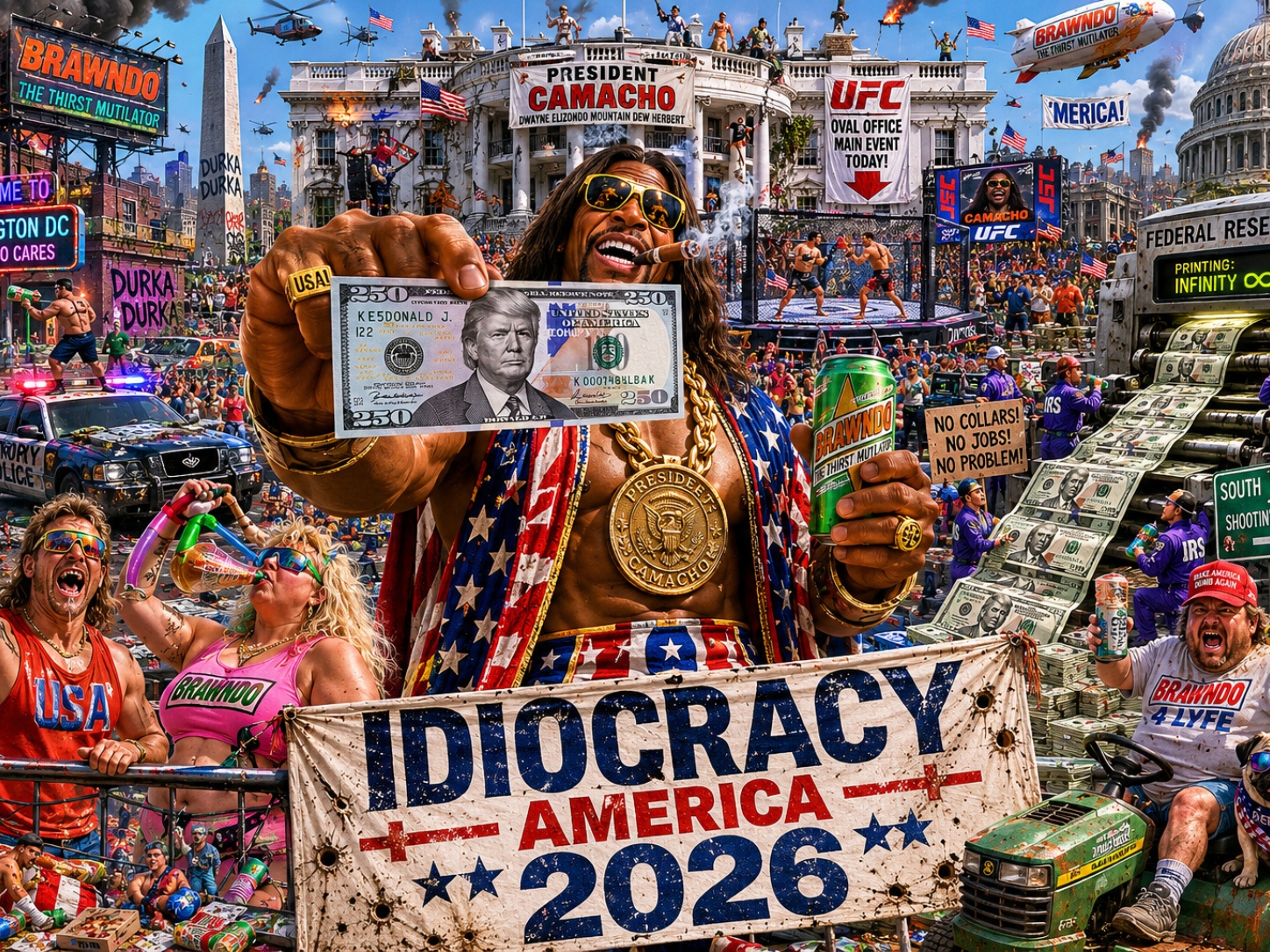
The comparisons to the film Idiocracy did not appear by accident.
That movie became a cultural reference point because it imagined a future where serious public life had been replaced by spectacle, noise, corporate influence, and entertainment-driven politics. So when critics looked at the White House lawn being prepared for a combat-sports event, many felt the image captured a deeper concern about where America may be heading.
The issue is not simply UFC. The issue is what happens when the highest symbols of government become stages for spectacle instead of spaces for solemn national purpose.
A republic depends on public trust. That trust weakens when citizens begin to feel that institutions are being used for personal branding, commercial display, political performance, or entertainment value. Government should not feel like a pay-per-view production. National milestones should not feel like marketing campaigns. Public symbols should not be treated as props.
The American Restoration Movement believes America must restore seriousness to public life.
That does not mean rejecting celebration. America should celebrate its history, its people, its military, its communities, its athletes, its workers, and its founding principles. But celebration should strengthen civic meaning, not cheapen it. It should remind citizens of responsibility, sacrifice, liberty, and constitutional duty.
When spectacle becomes larger than principle, the Republic becomes weaker.
This moment raises important questions. What kind of culture do we want around the presidency? What should the White House represent? Should national institutions be protected from commercial excess? Are public spaces being used to unify citizens, or to deepen the feeling that politics has become performance?
These questions go beyond one event or one administration.
For years, Americans have watched politics become more like entertainment. Outrage has replaced debate. Branding has replaced statesmanship. Viral moments have replaced long-term leadership. Social media has rewarded conflict over wisdom. Corporate power has learned how to attach itself to national identity.
ARM was created because millions of citizens sense that something must be restored.
The answer is not anger. The answer is not chaos. The answer is civic seriousness.
America needs leaders who respect the dignity of the offices they hold. It needs citizens who understand that institutions are not toys. It needs a culture that values truth over performance, service over celebrity, and constitutional duty over personal spectacle.
The White House should remind Americans that power is temporary, but the Republic must endure.
If America’s 250th anniversary is going to mean anything, it should not only be about fireworks, cameras, events, celebrities, and political theater. It should be a moment to ask whether we are still worthy of the inheritance we received.
The American Restoration Movement believes the answer can still be yes.
But restoration begins when citizens demand more seriousness from public life, more accountability from leaders, and more respect for the symbols that belong to the people.
The Republic is not entertainment.
It is a responsibility.
And that responsibility still belongs to We The People.